
Feeling unsure
In a culture obsessed with certainty

Hello! I’m sorry I haven’t written in so long…
Last week I had a similar conversation with two different friends. One is in a long-term relationship and the other is in the early dating stage. They both asked the question “how can you be sure you’re with the right person?”
They feel they have two parts of them, one part that feels sure about their partner. The other part has reservations. Sometimes the latter is a background hum and at other times the volume turns up to an overwhelming anxiety that they are making the wrong choices.
Not being sure is a dominant theme in therapy. People feel uncertain about lots of things; whether they’re on the right career path, whether they are a good person, if they want a second child, if the person they are seeing likes them back, if they are making the right decisions.
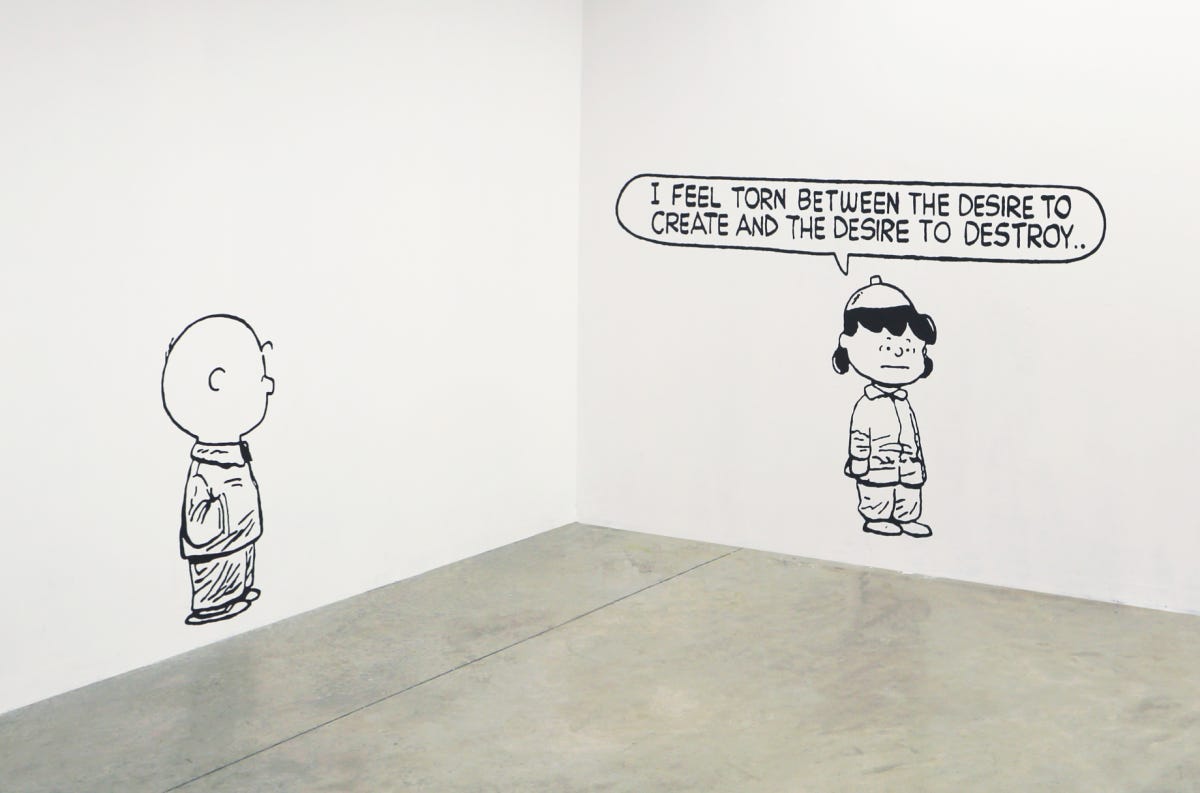
The feeling of being unsure often takes on a life of its own. What starts as having conflicting feelings about a person, thing or opportunity turns into an internal back and forth that can be intolerable. Family therapist Virginia Satir would call this “the feeling about the feeling”. Whilst we can’t always immediately resolve the initial emotion of being unsure as it’s origins can be complex, we can work with the feelings we have about it (guilt, anxiety, shame, dread).
I have many theories as to why we find it so difficult to be 50/50 about something. I think partly it’s because the modern world has tricked us into believing that we can achieve total self-mastery. We can know things now that we were never able to know before. The time someone reads our message, how many hours of deep sleep we got, how many steps walked, where the driver is who’s delivering our parcel. Technologies have afforded us so much information that many of our material needs are trackable and we rarely have to sit with not knowing.
However when it comes to matters of our inner lives, we can’t be afforded the same amount of certainty and having of all the answers. An Apple Watch can’t tell us if the next 6 months are going to be okay or how we feel about not being invited to someone’s birthday. We can’t know these things for sure because they often take time to crystallise and can be nuanced when they do.
Freud wrote that we are fundamentally ambivalent beings. Ambivalence is the state of having mixed or contradictory feelings. It can function as a healthy emotional state to process the world around us, taking us away from black and white thinking of something being “all good” or “all bad”. Whilst the world praises certainty, being ambivalent about areas of our lives has benefits. It allows us flexibility in thought and an ability to sit with differing viewpoints. To not be completely wedded to one way of thinking about something or a specific outcome can be helpful.
The conversations I have in real life are at odds with how people often speak online. On Instagram and LinkedIn, everyone seems so sure of everything! My algorithm is full of posts with captions like “My forever person <3” or “What you are getting completely wrong about ISAs” and “5 signs your gut health is irreversibly damaged”.
This is not intended to be critical of the people who speak online in these ways, because best believe I will be swiping through every post in the carousel and double tapping. But I do think it adds to this illusion that other people have a stronger sense of who they are, what they’re doing, and what they want. My sense is that beneath the personal brand, most people feel a lot more anxious about their lives than they let on.
So, I’m going to pass on the advice my psychoanalytic clinical supervisor gives to me whenever I go to him feeling chronically not sure: sit with it.
It doesn’t usually feel good, but the discomfort isn’t always evidence that something is wrong.
Be back soon!
Adelaide
More from me
I got a new website adelaideomahony.com! I’ve also started taking on clients through Aviva, Axa and Mindright.
Thanks for reading On Change! Subscribe for free to receive new posts.
Needed this